
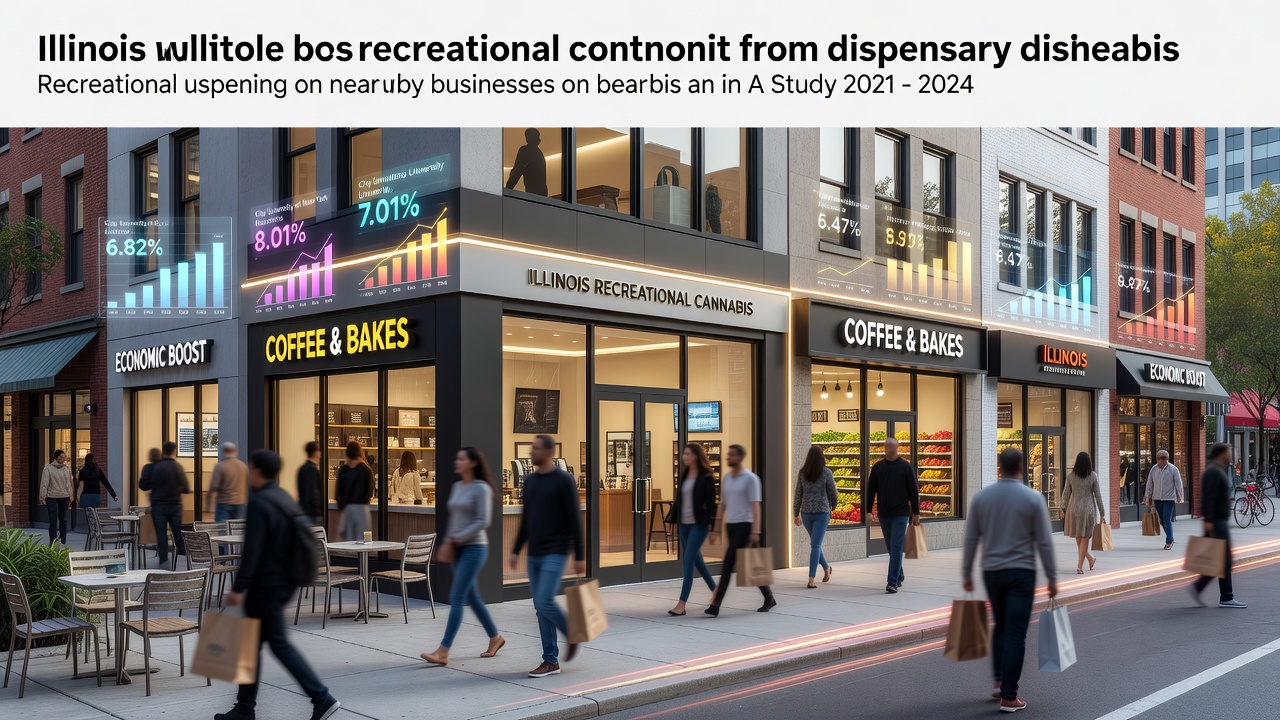
A new academic study puts numbers behind something commercial landlords and local chambers of commerce have suspected for years: a recreational dispensary moving into a commercial corridor doesn't just sell cannabis. It pulls foot traffic for everyone nearby. Researchers from the City University of New York, Northern Illinois University and the University of Miami analyzed card-purchase data and demographic records across Illinois from 2021 through 2024, and found that dispensary openings increase customer counts at nearby establishments by roughly 6.82%, transactions by 8.01%, and revenue by 7.47%.
Foot Traffic, Not Bigger Baskets
Here's the mechanism worth understanding. The gains come almost entirely from what economists call the extensive margin - more people walking in the door - rather than the intensive margin, which would mean existing customers spending more per visit. Revenue per transaction barely moved. What changed was volume. For a retail corridor, that distinction matters: a dispensary isn't making shoppers richer or more generous, it's making the block itself a more frequent destination. That's the kind of spillover effect normally associated with anchor tenants in a shopping center, not a single-use retailer operating under a state-issued cannabis license.
Not Every Storefront Benefits Equally
The study's sharper finding is about who actually captures that traffic. Food and beverage spots and essential retailers - the places people can fold into a trip without extra planning - saw significant gains. Non-essential retailers didn't. The logic tracks: grabbing a coffee or picking up groceries fits naturally into an already-planned errand. A larger, discretionary purchase requires its own decision-making process and doesn't piggyback as easily on dispensary foot traffic.
Chain establishments captured the spillover; independent businesses, statistically, did not. The researchers point to brand familiarity and standardized operations as likely reasons chains convert incidental foot traffic into actual transactions more reliably. For independent retailers and small operators near a new dispensary, that's a sobering detail - proximity alone isn't a strategy.
- Walkable neighborhoods saw stronger spillover effects than car-dependent commercial strips.
- Businesses with a smaller, more dispersed customer base captured more incremental demand than those already drawing heavily from a tight local radius.
- Weekend revenue gains were more pronounced, consistent with multipurpose, destination-style shopping trips.
What This Means for Operators and Landlords
For dispensary operators themselves, this research is a useful data point in zoning hearings and site-selection conversations, where local pushback often centers on assumptions about crime, traffic congestion, or declining property values rather than economic contribution. Commercial landlords evaluating a cannabis tenant for a vacant retail bay now have at least one peer-reviewed data point suggesting neighboring units could see a lift, not a drag, in customer activity. Municipalities weighing license caps or buffer-zone rules might also find this relevant, though one state's data over a three-year window isn't grounds for sweeping policy conclusions.
The authors are careful about limitations, and so should anyone citing this study. It covers a single state, relies on aggregated card-purchase data rather than direct sales records from individual establishments, and captures a specific post-legalization period in Illinois's adult-use market. Extensive margin gains in one metro corridor don't automatically translate to a rural town with a single-lane access road and no walkable retail cluster.
Still, paired with earlier research showing hotel revenue gains near dispensaries and elevated home values in legal-market states, a pattern is forming: adult-use retail, once treated purely as a compliance and tax-revenue conversation, increasingly looks like a measurable factor in local commercial real estate performance. That doesn't settle debates over zoning, advertising restrictions, or youth access - those remain live regulatory questions in every state weighing legalization. But for operators building a case to local planning boards, and for brokers pricing retail space near a dispensary application, the commercial argument just got a bit more concrete.