
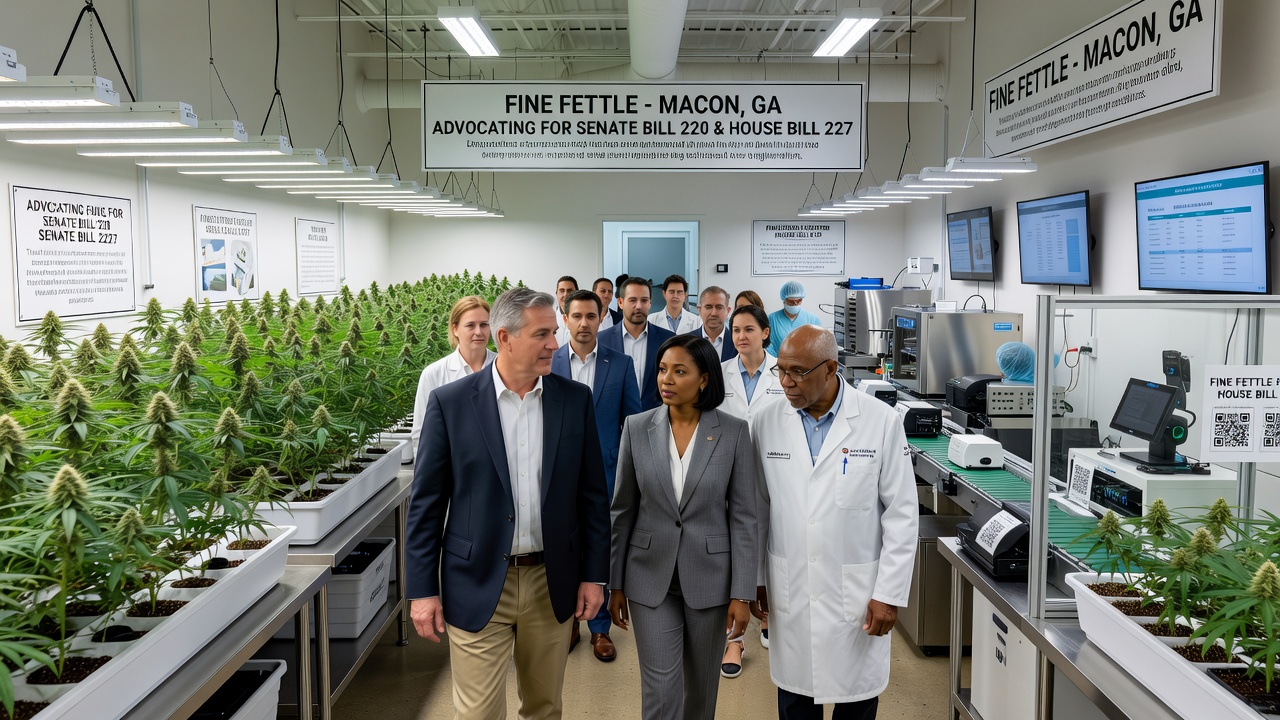
A decade after Georgia legalized medical cannabis, the program's expansion remains stuck in committee, and one licensed operator decided lobbying from the sidelines wasn't working. Fine Fettle, one of only three companies licensed to grow, manufacture, and distribute medical cannabis products in the state, invited lawmakers, physicians, and patients into its Macon facility for a firsthand look at cultivation and production. The goal, according to market president Judson Hill, was simple: put real people and real process in front of legislators who've watched two bills stall this session alone.
That kind of transparency push matters more than it might seem on the surface. Vertically integrated operators like Fine Fettle handle everything from seed to shelf under one roof - cultivation, extraction, packaging, and distribution to dispensaries - which means every stage sits under regulatory scrutiny simultaneously. Compliance logs, batch testing, and product tracking all have to hold up under inspection, and showing that process to policymakers directly counters the perception, as State Rep. Anissa Jones put it, that this is "folks out there just growing stuff wild in nature." For operators trying to scale responsibly in a limited-license state, that kind of credibility isn't optional; it's the foundation for expansion. On the operational side, the same discipline extends to retail infrastructure, including point of sale systems for marijuana dispensaries minnesota and other regulated markets rely on to track sales, verify patient status, and maintain the audit trail regulators expect. point of sale systems for marijuana dispensaries minnesota
What's Actually Stalled in the Legislature
Senate Bill 220 and House Bill 227 both aimed at loosening access barriers - easing the process for patients to obtain a medical cannabis card and updating allowable product forms to give doctors more effective options. Neither made it out of the chamber this session. That's not a small technicality. Product form restrictions directly shape what a licensed producer can manufacture and what a dispensary can stock on its shelves. A program limited to a narrow set of formulations leaves both patients and operators boxed in, regardless of how much cultivation or manufacturing capacity exists behind the scenes.
The Access Gap Physicians Are Flagging
Dr. Elmore Alexander's estimate - that current offerings serve roughly 80% of patients but leave a critical 20% underserved - points to a structural issue rather than a supply problem. When a state caps license counts at three producers and restricts product categories, the wholesale menu available to dispensaries stays thin by design. Expanding product diversity would require regulatory sign-off before a single new SKU reaches a shelf, which is why physicians frame this as a policy bottleneck rather than a manufacturing one.
Why This Matters Beyond Georgia
Limited-license medical markets like Georgia's operate under tighter margins and slower growth curves than adult-use states, and that shapes everything from wholesale pricing to how operators justify capital investment in cultivation expansion. Facility tours and legislator education efforts are a low-cost way to build the political case for change when litigation or ballot measures aren't realistic paths forward. For operators watching from other tightly capped medical states, Georgia's approach is worth tracking: sometimes the most effective compliance strategy isn't just following the rules - it's showing regulators exactly how those rules get followed.