
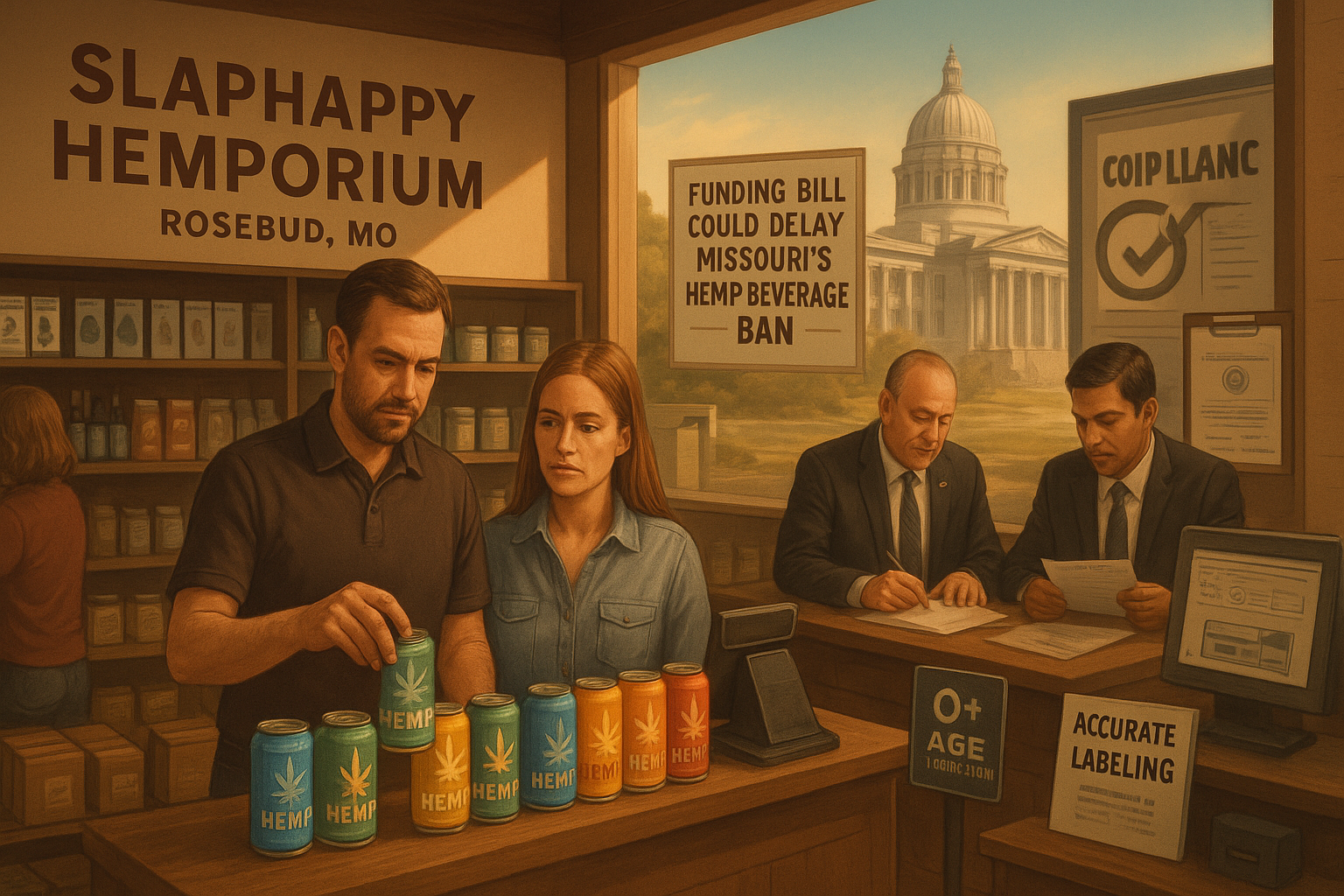
Missouri retailers selling hemp-derived THC beverages got a reprieve, at least on paper, over the weekend. The U.S. Senate approved a short-term funding measure early Saturday that would push the federal ban on intoxicating hemp products to Dec. 11, a move that - if the House concurs and the president signs off - would trigger a carve-out in Missouri's own law and let THC beverages stay on shelves past the state's Nov. 12 deadline.
The mechanics here matter for anyone running a retail operation in this space. Missouri Gov. Mike Kehoe signed legislation this spring that largely mirrors the federal hemp ban Congress passed last year, but state lawmakers wrote in a specific exception: if Congress delays the federal ban, only intoxicating beverages get to keep operating in Missouri; everything else - edibles, tinctures, vapes - goes off shelves as scheduled regardless of what happens in Washington. That's a narrow window, and it puts a premium on inventory management and SKU-level compliance tracking for operators trying to figure out what survives and what doesn't. Retailers relying on a modern point-of-sale system to segment product categories and flag regulatory status in real time are better positioned to adjust; the same infrastructure that powers, say, an Oklahoma dispensary POS platform handling shifting state rules could just as easily help a Missouri hemp retailer sort beverage SKUs from everything else facing removal.
A Patchwork That Punishes Product Diversity
Jay Patel, president of the Missouri Hemp Trade Association, called the Senate's 61-31 vote a "good sign," and noted there's apparently some appetite at the federal level for more durable regulation. Fair enough - but as he pointed out, whatever Congress does won't fully resolve Missouri's problems. The state ban's beverage-only exception creates a lopsided market: businesses built around canned seltzers and drinks get a lifeline, while companies selling edibles, capsules, or concentrates face a hard stop no matter what. That's an uncomfortable position for multi-category operators who now have to plan around a shelf life that varies by product form rather than by risk profile or lab testing outcomes.
Litigation Adds Another Layer of Uncertainty
The Missouri Hemp Trade Association and a coalition of hemp businesses aren't waiting on Congress. They filed suit last month in the U.S. District Court for the Western District, arguing the state's definitions of hemp and marijuana are unconstitutionally vague. That case is still pending, and it introduces a second track - separate from the federal funding fight - that could reshape compliance obligations before Nov. 12 arrives. For dispensary owners and hemp retailers, this means two moving parts to track simultaneously: a federal calendar tied to appropriations bills, and a state court calendar tied to constitutional claims. Compliance teams built around static rule sets aren't going to cut it here.
What Operators on the Ground Are Doing
John Grady, who runs Slaphappy Hemporium in Rosebud with his wife Kara, said the Senate vote makes it likely they'll keep selling THC seltzers through December. But he's blunt about the tradeoff: their business started as a beverage producer, so the delay helps that side of the operation, while the rest of their product mix - including edibles customers are already stockpiling - faces removal regardless of federal action. That's the kind of split outcome retailers should plan for now rather than after the fact: recalibrating wholesale menus, adjusting reorder points, and communicating clearly with customers about which categories are genuinely at risk versus which have a plausible extension.
None of this changes the underlying consumer-safety and compliance basics. Age verification, lab testing, and accurate labeling remain baseline expectations regardless of how the federal and state timelines shake out, and operators should treat this period as a compliance stress test rather than a reprieve to relax on documentation.