
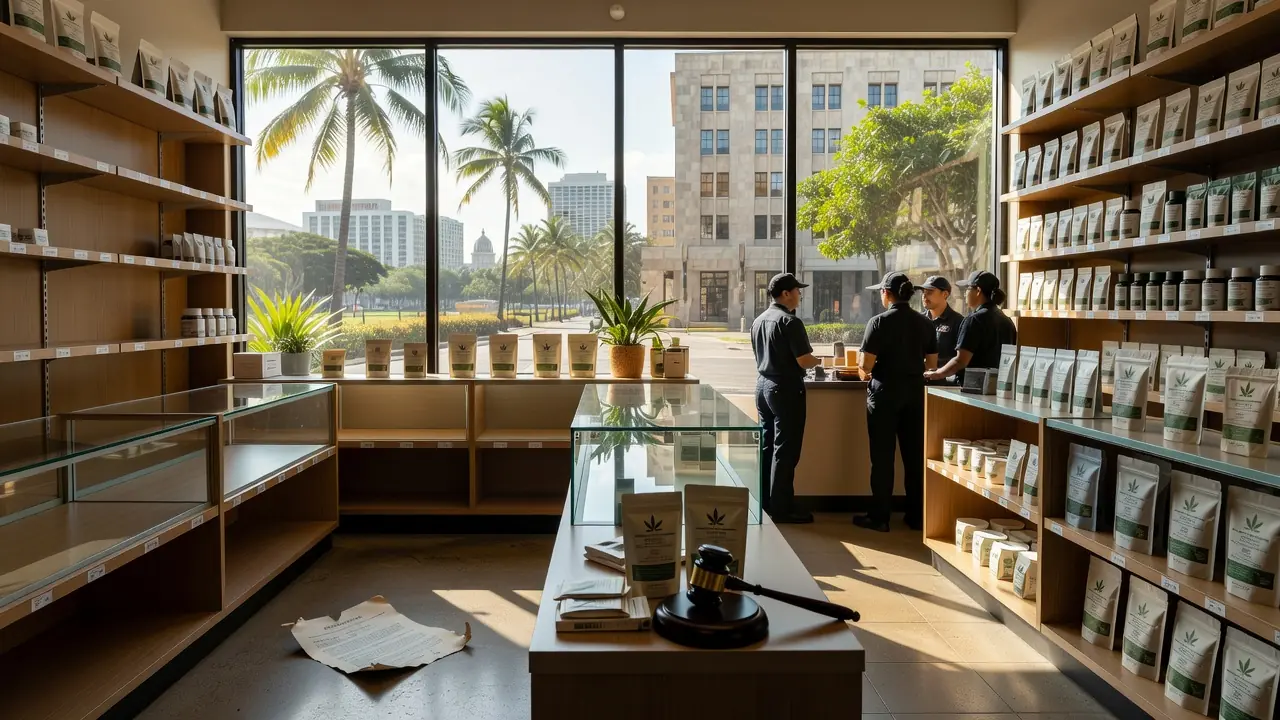
Shelves that once carried hemp-derived THC gummies, vapes and pre-rolls across dozens of Hawaiʻi retail shops are now bare, the result of a Department of Health enforcement push that began in July. The crackdown has pushed one Oʻahu retailer into federal court, arguing the state has improperly recriminalized a product Congress made legal in 2018. The dispute lands at the intersection of federal hemp law, state cannabis licensing, and a medical dispensary industry that says it's been losing customers to unregulated competition.
A Farm Bill Loophole Meets State Law
The mechanics here matter. Congress's 2018 Farm Bill legalized hemp containing no more than 0.3% delta-9 THC by weight - a threshold that sounds restrictive on paper but, in practice, left plenty of room for manufacturers to extract and concentrate THC into gummies, drinks and pre-rolled products that function much like their marijuana-derived counterparts. Hawaiʻi's 2020 hemp law allowed cultivation but never authorized retail sale of THC products made from hemp. That gap between what federal law permitted and what state law actually authorized is exactly where the unlicensed retail market grew.
For operators, this is the kind of regulatory seam that's hard to manage from a compliance standpoint. A product fully legal to ship across state lines under federal statute can still be illegal to sell at the point of purchase. Retailers who leaned on that ambiguity - stocking hemp beverages, edibles and pre-rolls without a medical cannabis license - now face a state posture that treats those products as unauthorized cannabis goods subject to removal.
Licensing Structure Shapes the Fight
Hawaiʻi's medical dispensary system caps the number of licensees at eight, each permitted to run multiple retail locations under rules the Legislature has loosened over time for rural or underserved areas. That cap is central to the current argument. Unlicensed hemp retailers claim the enforcement push is less about consumer protection and more about shielding a small number of license holders from competition - a form of market protectionism dressed up as public health policy. Licensed dispensary operators counter that their products go through testing and compliance obligations the hemp retailers never had to meet.
Both claims can be true at once. Regulatory barriers that exist to ensure product testing and batch accountability can also, as a side effect, concentrate market share among a small number of incumbents. That's not unique to Hawaiʻi - alcohol distribution, pharmacy licensing and other regulated retail categories show the same pattern. The question for policymakers is whether the fix is tighter enforcement against unlicensed sellers or a broader licensing structure that lets more compliant operators into the market.
Compliance Stakes for Retailers Everywhere
Whatever the court decides, the underlying federal question may soon be settled regardless. Legislation signed in 2025 redefines hemp in a way that's expected to close the loophole that allowed intoxicating hemp products to proliferate nationally, with an effective date pushed to December. That shift carries implications well beyond Hawaiʻi.
- Retailers selling hemp-derived THC products in any state should expect tightening federal definitions to eliminate the regulatory gray zone they've operated in.
- Multi-state operators and brands reliant on hemp-derived beverages or edibles face supply chain disruption if reformulation or delisting becomes necessary.
- Licensed medical and adult-use dispensaries should anticipate shifting consumer demand as hemp-channel competitors lose shelf space.
- Lab testing, batch documentation and compliant packaging remain the clearest differentiators between licensed and unlicensed retail channels.
For dispensary operators, investors and compliance teams watching Hawaiʻi, the lesson isn't really about one island market. It's a preview of what happens when federal definitions change faster than state retail rules can adapt - and how quickly a loophole-dependent business model can collapse once Congress closes the gap it was built on.