
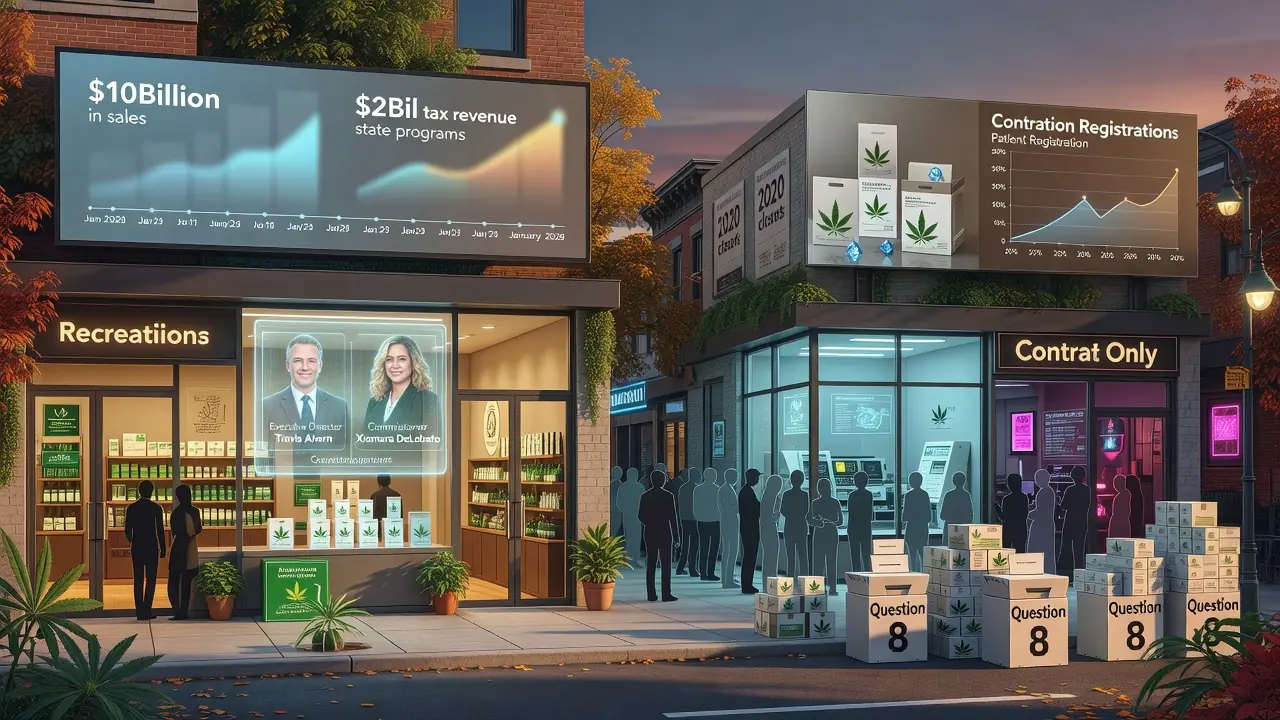
Massachusetts voters will decide this fall whether to dismantle the state's recreational cannabis market entirely. Question 8 would repeal adult-use marijuana sales, forcing a licensed industry that has generated roughly $10 billion in gross sales and $2 billion in tax revenue since 2018 to either shut down or restructure around medical cannabis alone. State regulators say they're already gaming out what that transition would look like, and the picture isn't tidy.
A Precedent From the Pandemic
The Cannabis Control Commission isn't guessing blind here. When COVID-19 forced recreational dispensaries to close for roughly two months in 2020, medical marijuana sales kept running. Commission Executive Director Travis Ahern says that period offers a working model for what repeal might trigger: a surge of patients registering for medical cards simply to maintain legal access. The commission saw patient registration climb more than 50 percent during that stretch. Apply that pattern to a permanent repeal rather than a temporary closure, and the medical market would need to absorb demand it was never built to carry at scale - more patients, more product movement, more pressure on a system designed for a narrower population.
What Changes Operationally
Here's the catch with repeal: it wouldn't happen overnight. Ahern notes that even if Question 8 passes, the recreational sales ban wouldn't take effect until January 2028, giving operators a runway - but not an easy one. Dispensary owners who built vertically integrated businesses around adult-use volume would need to recalibrate everything from wholesale menus to staffing models to point-of-sale configuration. Retail License holders without a medical designation could be staring at a forced wind-down. Multi-state operators with Massachusetts footprints would need to reassess capital allocation across their portfolios, since a state representing billions in annual sales suddenly contracting to a medical-only footprint changes the math on everything from real estate leases to supply contracts.
Medical dispensaries, meanwhile, would need to rebuild for a different customer base almost overnight. That means revisiting inventory planning, batch testing throughput, and compliance logging under a system that historically handled far lower transaction volume than the adult-use channel.
The Regulatory and Consumer-Safety Stakes
Commissioner Xiomara DeLobato frames the vote as a question of oversight, not just revenue. The $2 billion in tax contributions tied to the adult-use market funds state and local programs, and that money disappears if recreational sales end. But DeLobato's sharper point is about what regulation actually buys consumers: lab testing, certificates of analysis, compliant packaging, and seed-to-sale tracking through METRC - the infrastructure that makes a legal purchase traceable and tested, batch by batch.
Ahern's concern is straightforward. People will keep consuming cannabis regardless of what the ballot says. The real question is whether that consumption happens through a tested, regulated supply chain or an illicit one with no COA requirements, no age verification, and no accountability if a product batch turns out contaminated. A shrinking regulated market doesn't eliminate demand - it just relocates where that demand gets filled, and an illicit market doesn't file compliance logs or submit to commission audits.
Where the Industry Stands Now
Recent polling suggests most Massachusetts residents intend to vote against Question 8, which would preserve the recreational market as-is. But the Cannabis Control Commission isn't treating that as settled. DeLobato says the agency is preparing contingency plans regardless of outcome - because if voters do move in that direction, the pivot has to happen fast, and preparation now beats scrambling later. For operators, investors, and suppliers watching from the sidelines, the vote is a reminder that legal cannabis markets remain politically contingent in ways alcohol retail or other regulated consumer goods generally aren't. That's a risk factor worth pricing into any long-term Massachusetts business plan, win or lose.