
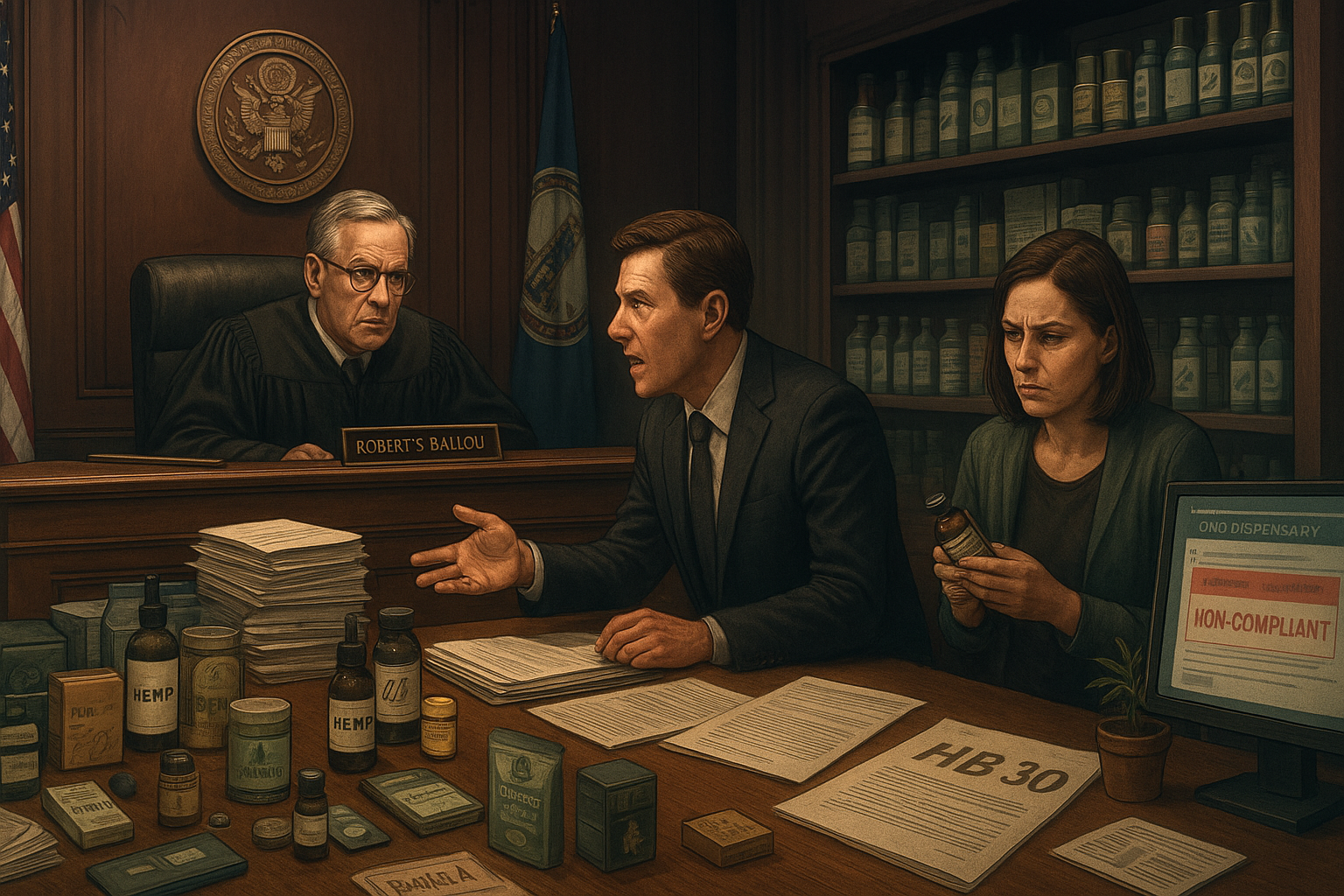
A federal judge in Virginia spent nearly five hours Wednesday hearing arguments over whether to pause enforcement of the state's sweeping new hemp restrictions before they take effect Saturday. Seven hemp businesses are asking U.S. District Judge Robert S. Ballou for a temporary injunction, arguing the changes could force closures and strand them with inventory that overnight becomes illegal to sell. The stakes are immediate: House Bill 30 eliminates the 25-to-1 CBD-to-THC exception and caps most hemp products at two milligrams of total THC per package, a threshold far stricter than what retailers built their businesses around.
For operators, this isn't an abstract regulatory tweak - it's a direct hit to SKU management and shelf inventory that took years to build out. Products compliant under the old CBD-to-THC ratio suddenly fail to meet Virginia's redefined hemp threshold, which means budroom-style shelving full of tinctures, edibles and beverages could shift from lawful merchandise to contraband at midnight. That kind of overnight reclassification creates a compliance nightmare no seed-to-sale system was built to handle gracefully; inventory logs, POS categorization, and even something as routine as an Ohio dispensary POS platform integration weren't designed around a same-day legal status flip for products already on the shelf. Retailers in adjacent regulated markets watch this kind of abrupt rule change closely, since it previews how quickly compliant inventory can become a liability under shifting state definitions. Ohio dispensary POS platform
Why the Timeline Matters
Attorney Chap Petersen, representing the plaintiffs, argues the compressed timeline is itself a due-process problem. Governor Youngkin didn't sign the bill until June 29, leaving businesses roughly 45 days to unwind supply chains, adjust wholesale menus, and figure out what to do with product already in the pipeline. That's a tight runway for any retail sector, but it's especially unworkable for an agricultural commodity. Hemp crops planted in April with an October harvest can't simply be redirected to another market the way a piece of equipment might be relocated across state lines. Once a crop is harvested and processed into a finished product, there's often no alternative buyer if the state redefines what counts as legal hemp.
The Compliance Gap Nobody Filled
Petersen also pointed to something operators in newly regulated categories run into constantly: regulatory silence. He described a lack of guidance from Virginia's cannabis agency - no policy paper, no town hall, nothing resembling the kind of proactive compliance communication that helps small operators retool packaging, update lab-tested COAs, or recalibrate formulations before a deadline hits. Absent that kind of guidance, compliance becomes guesswork, and guesswork is expensive when felony exposure is on the table.
What's Actually Being Requested
The plaintiffs aren't asking the court to strike down the law outright. They want a temporary injunction preserving the status quo while a broader constitutional challenge - including a potential takings claim - moves through the courts, possibly toward trial early next year. Petersen said he'd rather see the Virginia General Assembly revisit the statute than litigate it to the end, framing this as a jobs and small-business issue rather than a fight over legalization itself.
- New law caps most hemp products at 2mg total THC per package
- 25-to-1 CBD-to-THC exception eliminated statewide
- Enforcement scheduled to begin August 15 absent a court-ordered pause
- Ruling from Judge Ballou expected within days of the hearing
Whatever Ballou decides, the case is a preview of the friction awaiting other states as they narrow hemp-derived THC thresholds ahead of adult-use rollouts. Retailers, wholesalers, and compliance teams elsewhere would do well to treat Virginia's scramble as a case study in what happens when statutory deadlines outpace operational reality.