
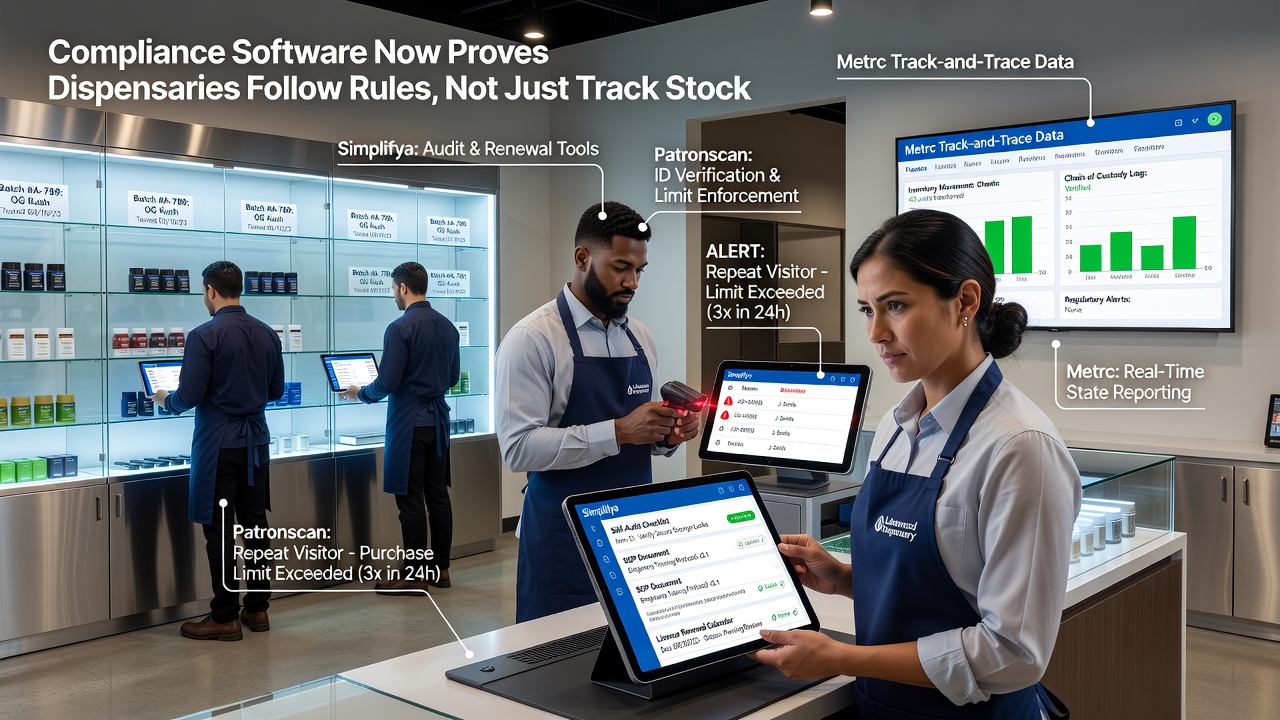
Inspection-readiness has become its own software category, separate from the seed-to-sale systems that track plants and product batches. A dispensary can run flawless inventory counts and still fail an audit if its SOPs are outdated, its staff training logs are missing, or its license renewals slipped past a deadline. The tools covered here handle that second, often overlooked layer: proving - on paper, in real time - that an operator is doing what the regulator expects.
Self-audits, SOPs, and the paper trail regulators want to see
Simplifya, based in Lakewood, Colorado, builds its platform around self-audits, SOP management, and license tracking across the states it covers. The logic is straightforward: a state inspector doesn't just check what's on the shelf, they check whether the dispensary has a documented process for handling recalls, training new budtenders on purchase limits, or storing product away from public view. Rootwurks, out of Austin, takes a similar approach but leans harder into training - its checklists and assessments were developed with the cannabis law firm Vicente Sederberg, which gives the compliance content a regulatory pedigree that matters when an operator has to defend its procedures during a license renewal.
Fair enough, one might ask why this needs dedicated software at all. The answer is volume. A multi-state operator juggling license renewals, SOP revisions, and training certifications across several jurisdictions can't manage that on spreadsheets without something eventually falling through. Missed renewal dates and stale SOPs are exactly the kind of findings that show up in enforcement actions.
Quality management and the counter-level checks that catch human error
QT9 serves a narrower but no less important slice of the market: cannabis manufacturers who need document control, corrective and preventive action (CAPA) tracking, audit management, and training records in one system. This is the same quality management discipline used in regulated manufacturing outside cannabis, applied here because state regulators increasingly expect it - especially for edibles, concentrates, and other manufactured products where a labeling error or batch mix-up carries consumer-safety consequences, not just a compliance citation.
At the point of sale, the risk shifts from paperwork to people. Budtenders have seconds to verify age, confirm identity, and track daily purchase limits per customer - limits that exist precisely to curb diversion and over-purchasing. Patronscan's ID scanning tools flag repeat visits so staff can catch a customer trying to exceed the legal limit across multiple transactions, something nearly impossible to track manually during a busy shift. Metrc, the track-and-trace system used by states that contract with it, remains the backbone connecting that counter-level transaction back to the state's reporting requirements.
Why banks need their own compliance platforms
Cannabis remains federally illegal, which means a bank or credit union that accepts a dispensary's deposits takes on regulatory exposure most financial institutions would rather avoid. The ones that stay in the business do so because they can document rigorous due diligence - and that's where a separate category of bank-side platforms comes in. Green Check, based in Bonita Springs, Florida, along with Shield Compliance in Seattle and RiskScout, give banks onboarding, ongoing monitoring, and reporting tools built specifically for cannabis accounts. CRB Monitor, headquartered in Nashville, maintains a database of cannabis licenses and beneficial ownership information that banks use for know-your-customer checks.
In practice, an operator may never touch these platforms directly, but it feels their effects every time it opens an account, renews a license, or changes ownership structure. A bank running weak monitoring risks losing its ability to serve cannabis clients at all, which is part of why this side of the market has professionalized so quickly. The dispensary's compliance posture and the bank's due-diligence file are, in a sense, two halves of the same inspection.