
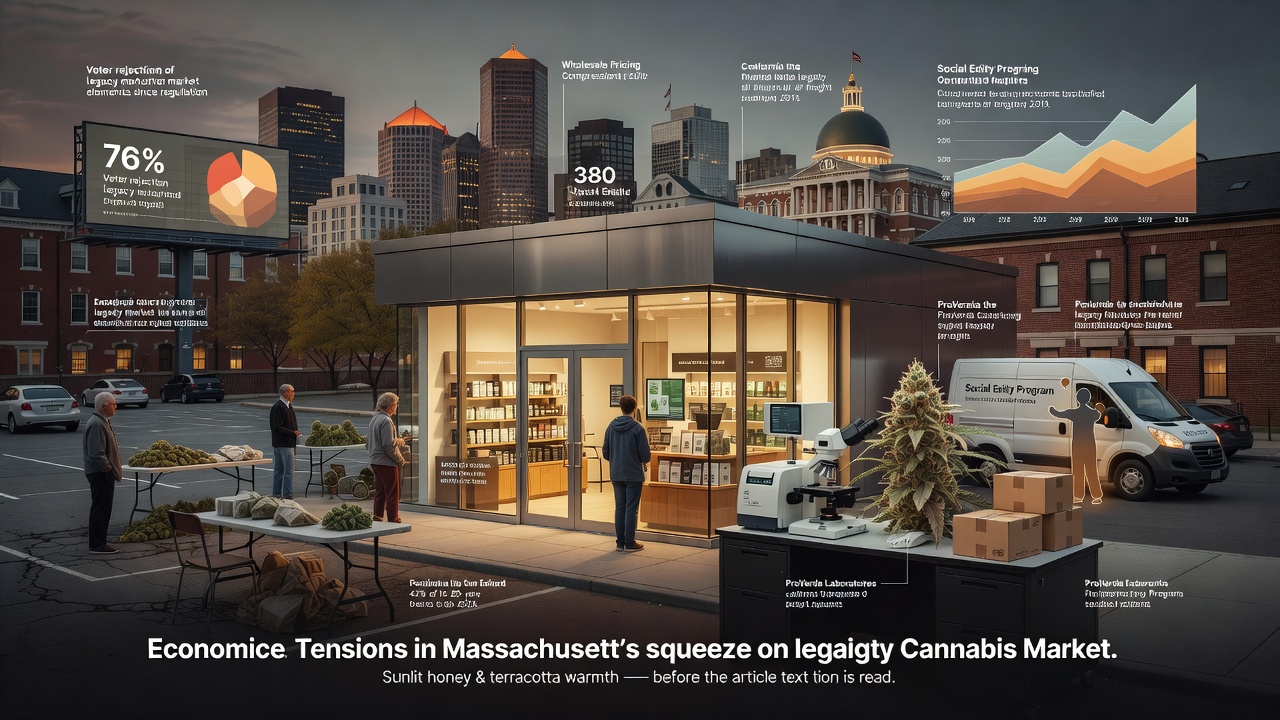
Massachusetts voters just rejected a repeal of adult-use cannabis by a 76% margin, a result that settles the legal question but leaves an economic one wide open: what happens to the legacy sellers who built the market before there was a market? The answer, according to operators and state data alike, is that the underground trade is shrinking steadily, even if it hasn't disappeared.
The Math No Longer Works for Legacy Sellers
State figures show roughly 61% of cannabis users now buy from a licensed store, while about a quarter still rely on informal sources. That's a meaningful shift from the early post-legalization years, and it tracks with what's happened to wholesale pricing since 2018. As more of the state's roughly 380 operational retailers came online, flower prices compressed, squeezing margins for anyone still moving product outside the regulated system. One longtime distributor described flying product in from California and clearing maybe $200 a unit after travel and labor costs - numbers that don't pencil out against a six-hour flight and a rental car. In practice, though, the bigger pressure isn't romantic nostalgia for small-batch growers. It's basic unit economics. Legal retailers absorb excise tax, compliance costs, and seed-to-sale tracking through METRC, yet they still beat the street on convenience, consistency, and - increasingly - price.
What the Regulated Channel Actually Buys Consumers
The case for the legal market isn't just convenience. Chris Hudalla of ProVerde Laboratories noted that Massachusetts enforces near-zero tolerance for prohibited pesticides in cultivated flower, which means lab-tested product sold through a licensed dispensary carries a different risk profile than anything bought off a folding table in a parking lot. That said, Hudalla was careful not to oversell it: regulated flower can still develop mold, and potency claims on packaging don't always match what's in the batch. His read is that enforcement and lab oversight need to tighten further, with changes expected as new leadership takes over at the Cannabis Control Commission. For operators, that's a signal worth watching - tighter COA scrutiny and batch testing standards tend to arrive with new regulatory leadership, and retailers that haven't audited their supplier testing practices recently may want to get ahead of it.
Social Equity as a Pipeline, Not Just a Policy Line
Some legacy operators have moved from the informal market into licensed business through the state's Social Equity Program, designed for people disproportionately affected by cannabis enforcement before legalization. Devin Alexander of Rolling Releaf, part of the program's inaugural cohort, built a delivery business that now serves customers who, as he put it, no longer have to meet someone in a shady parking lot to get product. That's the policy working as intended - converting informal market experience into licensed, taxed, compliant retail. But the pipeline is narrow. Licensing remains out of reach for plenty of former legacy sellers, whether because of capital requirements, criminal records, or simple lack of access to the application process.
Why the Underground Market Won't Fully Disappear
Younger consumers - those under 21 and legally barred from purchasing - still rely heavily on informal sources, with the state's data showing 42% of 16- to 20-year-olds buying from a dealer. That's an age-restriction problem more than a market-design flaw, and it's one regulated retail can't solve on its own. Separately, some industry voices argue the state should extend more flexibility to unlicensed cultivators, chefs, and small manufacturers who helped build the category before there were storefronts to sell it from. Whether that happens is a policy question, not a market one. For now, the trend line is clear: legal retail is absorbing most of the demand, pricing is doing a lot of the persuading, and the remaining informal market is smaller, older in its customer base skew, and increasingly a matter of access rather than preference.